
A report dated March 25, 2026, written by Deutsche Bank strategist Mallika Sachdeva, makes an interesting observation: the course of the war with Iran could test the foundations of the petrodollar regime and, consequently, the dollar’s role as the world’s reserve currency. This is very interesting. Since the beginning of the war, we have been constantly discussing the potential impact of the closure of the Strait of Hormuz on global supply chains, the burdens that energy supply shocks will bring to countries, the wave of inflation, and many other issues. However, the idea that war poses a threat to the petrodollar regime is truly fascinating.
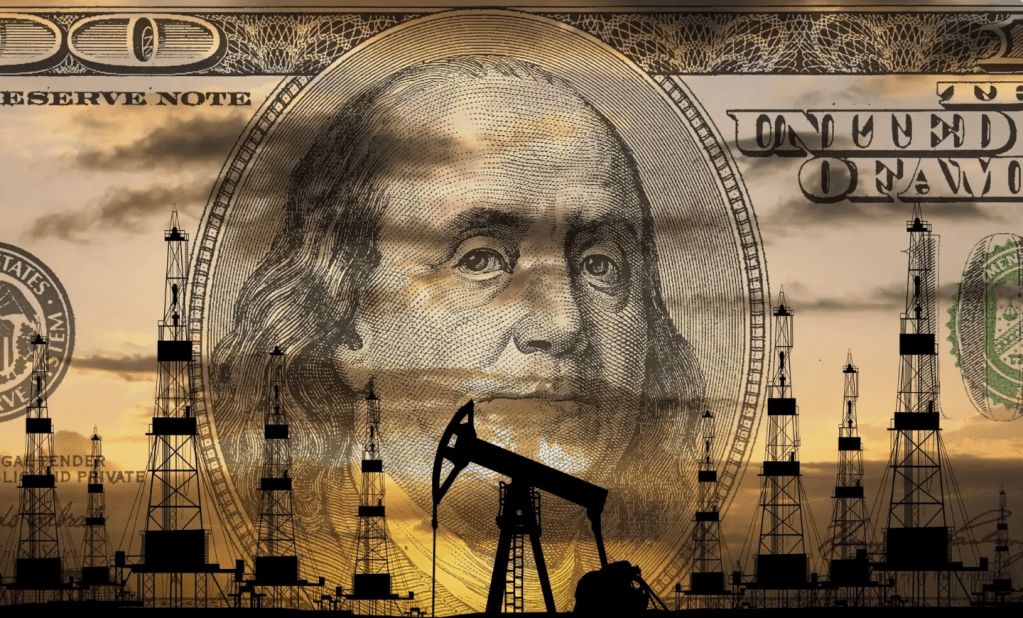
Photo Credit: https://aposto.com/s/petrodolar-sisteminden-petroyuan-sistemine-gecis-olasi-mi
The Deutsche Bank report emphasizes how changes in Middle Eastern oil trade, sanctions, and alternative payment systems could gradually erode the dollar’s dominance in global trade and savings.
We are closely following news that ships may be allowed to pass through the Strait of Hormuz in exchange for oil payments in yuan. According to Lloyd’s List Intelligence, only 77 ships passed through the Strait of Hormuz in the first half of March 2026. In the same period last year, 1,229 ships made this passage. This represents a decrease of approximately 94% in tanker traffic. However, according to Open Magazine, while the Strait of Hormuz is closed to ships from all other countries, between 11.7 and 16.5 million barrels of Iranian crude oil have passed through the Strait of Hormuz to China via a secret fleet under the Iranian Revolutionary Guard’s protection. These transits are believed to be paid for in yuans.
It is precisely from this point that Deutsche Bank suggests a US-Iran-Israel war could be a significant catalyst for the erosion of petrodollar dominance and the beginning of the petroyuan. They argue that a world that becomes more self-sufficient in defense and energy could also hold fewer USD reserves.
It is worth pausing here to look at what the petrodollar system is and even its origins.
The petrodollar system refers to a global economic order based on the pricing and sale of the vast majority of crude oil traded worldwide in US dollars (USD). This system is one of the most fundamental elements reinforcing the dollar’s status as a “global reserve currency.”
The roots of the petrodollar system date back to the early 1970s. In 1971, the US exited the Bretton Woods system, which pegged the dollar to gold (also known as the Nixon Shock), creating the risk of dollar devaluation. Subsequently, a strategic agreement was reached between the US and Saudi Arabia in 1974. According to the agreement, Saudi Arabia agreed to sell its oil only in US dollars, and in return, the US provided Saudi Arabia with military protection and technical support. Other OPEC countries soon followed this model and began selling oil in dollars. The petrodollar system is based on a simple cycle.
In the first stage of the cycle, oil-exporting countries (e.g., Gulf countries) sell oil and receive large amounts of US dollars.
In the second stage, countries that have to import oil (Turkey, India, European countries, etc.) are forced to hold USD reserves in their central banks to buy oil. This keeps the global demand for the dollar high.
The final stage is the investment stage, which is a kind of recycling; oil-exporting countries generally reinvest the large amount of surplus dollars they earn (“petrodollars”) back into the US financial system by investing them in US bonds, stocks, or real estate. Thus, the cycle is completed. The petrodollar system is vital to the US. The high demand for the dollar also allows the US to run a large trade deficit.
Returning to the possibility of a petroyuan, the following points stand out.
First, the petrodollar was based not on an agreement but on a security guarantee. It seems that Iran’s attack on regional countries is, on the one hand, to spread the war generally, and on the other hand, to give the impression that America can no longer protect these countries. There is no doubt that the prolongation of the war will disrupt this protective role. The informal nature or erosion of the petrodollar system also makes it diplomatically difficult to manage the process. However, for Gulf countries, China’s lack of enthusiasm for assuming a protectionist role raises questions.
From another perspective, when Bretton Woods collapsed, there was no reliable alternative architecture. However, today, Russia is increasingly selling energy to China in Yuan, India is working on alternative payment methods in its trade with sanctioned partners, BRICS countries continue to discuss non-dollar payment mechanisms, China’s CIPS payment system provides a functional alternative to SWIFT, and the Yuan is included in the IMF’s SDR basket and, with a 12.28% share, comes right after the Dollar and Euro in the basket.
In short, much has changed since yesterday. Things are in China’s favor here.
Despite this, the dollar’s structural advantages remain strong. The dollar does not seem likely to be easily dethroned. China still maintains capital controls, its financial markets are not yet as open or reliable as American markets, and many states continue to prefer the liquidity, legal protections, and depth of dollar-based markets over yuan-based markets. This is sufficient to show that the Yuan is not yet ready to shoulder the full burden of being a global reserve currency. Therefore, even though many countries are dissatisfied with the dollar’s dominance, they do not seem willing to switch one monetary dependency for another.
It is clear that the dollar’s reign will not continue as before, but whether replacing the dollar with the yuan is the right or realistic option is debatable. While all this is happening, a completely detached Europe and Euro seem quite meaningless.

 İçimden Geldiği Gibi
Yorum bırakın